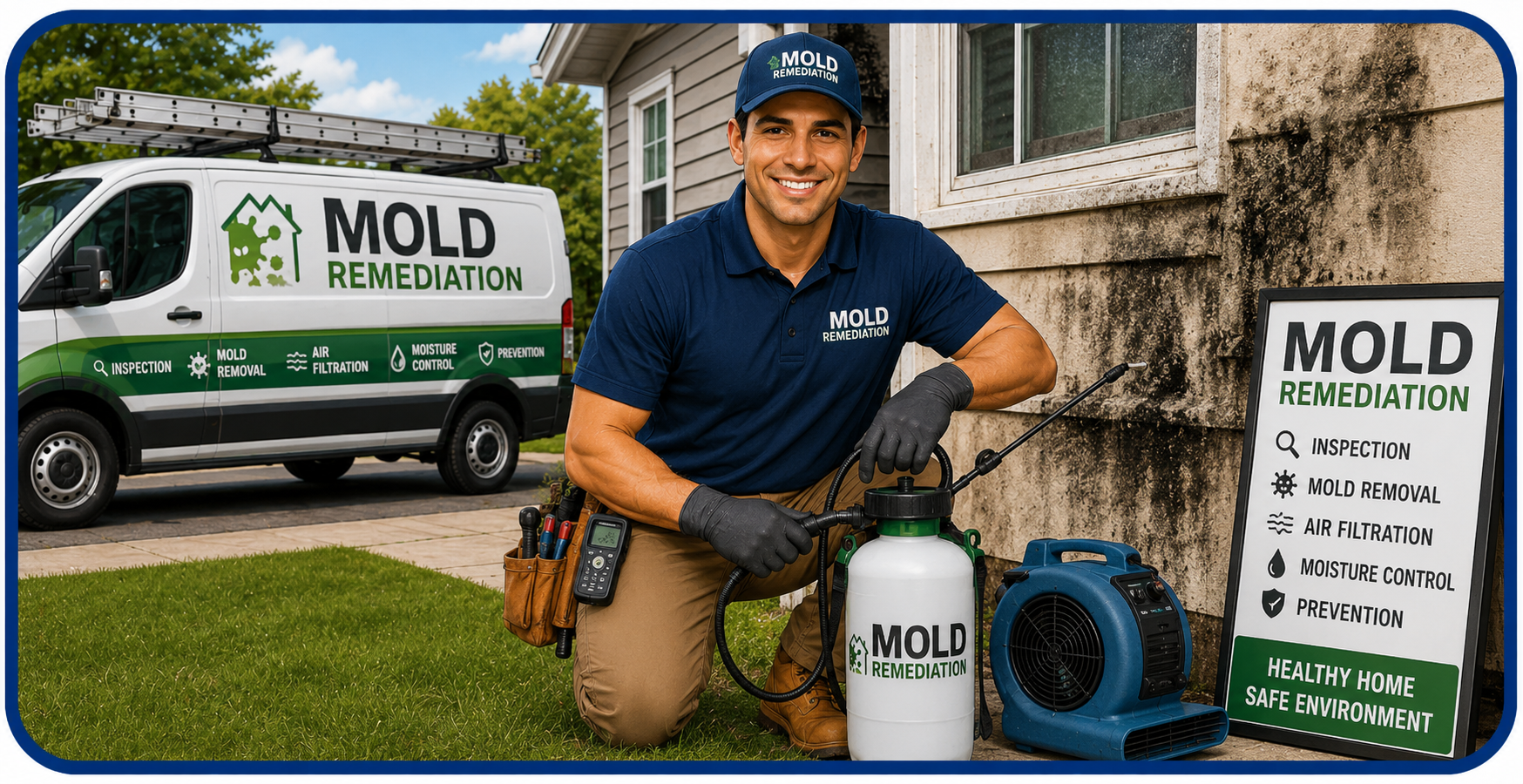
Whole-home visual and moisture survey
A room-by-room walkthrough with a moisture meter in hand, including spaces most people never look at, like the attic and under the house.
Smell mold but can't see it? Wondering whether that old leak left something behind the drywall? Breffni Remediation connects you with licensed and insured independent mold inspectors in University of California-Davis who use moisture meters, thermal cameras, and a trained eye to find out what's really going on.
Inspection comes first for a reason. Without it, you're guessing at how big the problem is and paying someone else to guess too.
Real people pick up 24/7.

An inspection is only as useful as the person doing it and the report they hand you. Here's what we look for in the inspectors we refer.

Inspectors carry pin and pinless moisture meters, infrared thermal cameras, hygrometers, and often a borescope to look inside a wall cavity through a hole smaller than a dime.
Ask about independence. If you'd rather the inspector not be the company that removes the mold, tell the dispatcher and we'll match you accordingly.
Inspection fees are quoted before the visit, with any optional lab sampling priced separately so you decide whether it's worth it.
Closing on a house in ten days? Tell the dispatcher. Local inspectors in University of California-Davis can often fit urgent visits in quickly.
From a single musty room to a whole-house pre-purchase check, here's what's available.
A room-by-room walkthrough with a moisture meter in hand, including spaces most people never look at, like the attic and under the house.
Thermal scans cover a lot of wall and ceiling in a short time, showing where to look closer without cutting anything.
Air handlers, evaporator coils, drain pans, and return plenums are classic hiding places. The inspector checks for growth, standing water, and clogged condensate lines.
Buying or selling? A focused mold and moisture inspection gives you documentation to negotiate repairs or price before closing.
The report tells you what was found, where, and why, plus a plain-language scope any remediation company can price from.

Four steps from worry to a plan.
Describe what you noticed and when it started. That helps the inspector arrive with the right tools.
The visit opens with a short conversation about the home's water history, then a methodical walk through the property.
Before leaving, the inspector walks you through what the meters and camera showed and whether lab sampling would add anything.
You walk away with documentation and a clear plan, not a vague recommendation to call someone else.

One call gets a licensed and insured local inspector on the schedule, often within a day or two.
Speak to Dispatch: +1-844-326-4757Here's what some recent callers said.

Our guest room had a musty smell for months and nobody could find anything. The infrared scan showed a cool patch along the exterior wall, and the meter confirmed it. A downspout was dumping water against the foundation.
We were under contract on an older home and wanted more than the general inspection. The mold inspector spent three hours there, found growth on the HVAC coil, and the sellers paid to fix it before closing.
I appreciated that he didn't try to sell me anything. He found one small area under the kitchen sink, gave me a scope, and told me it was a short job.
My daughter's allergies were worse at home. Every room in the report had photos and readings, which made it easy to get quotes and decide what to do.
The inspector asks about water history, walks the property with moisture meters and often a thermal camera, checks the HVAC system, attic, and crawl space, and explains the findings before leaving.
Most homes take one to three hours depending on size, access to attics and crawl spaces, and how much there is to check.
Yes. A general home inspection notes visible concerns across the whole house. A mold inspection focuses on moisture and microbial growth with specialized tools like thermal cameras and moisture meters.
It's a smart option. Separating inspection from removal avoids any conflict of interest, and we can route your call to make that happen.
Only when it adds value. The inspector should explain whether sampling would change the recommendation before you pay for it.
Often, yes. Thermal imaging and moisture meters point to wet areas, and a borescope can look inside a wall through a very small hole when confirmation is needed.
Inspection calls from anywhere in University of California-Davis are routed to an independent inspector who works locally.
Common University of California-Davis service zip codes include 95616.
Nearby towns are usually covered too, as listed below.
Call +1-844-326-4757 to Confirm